 TRUSTED NEWS FROM KHATIMA & UTTARAKHAND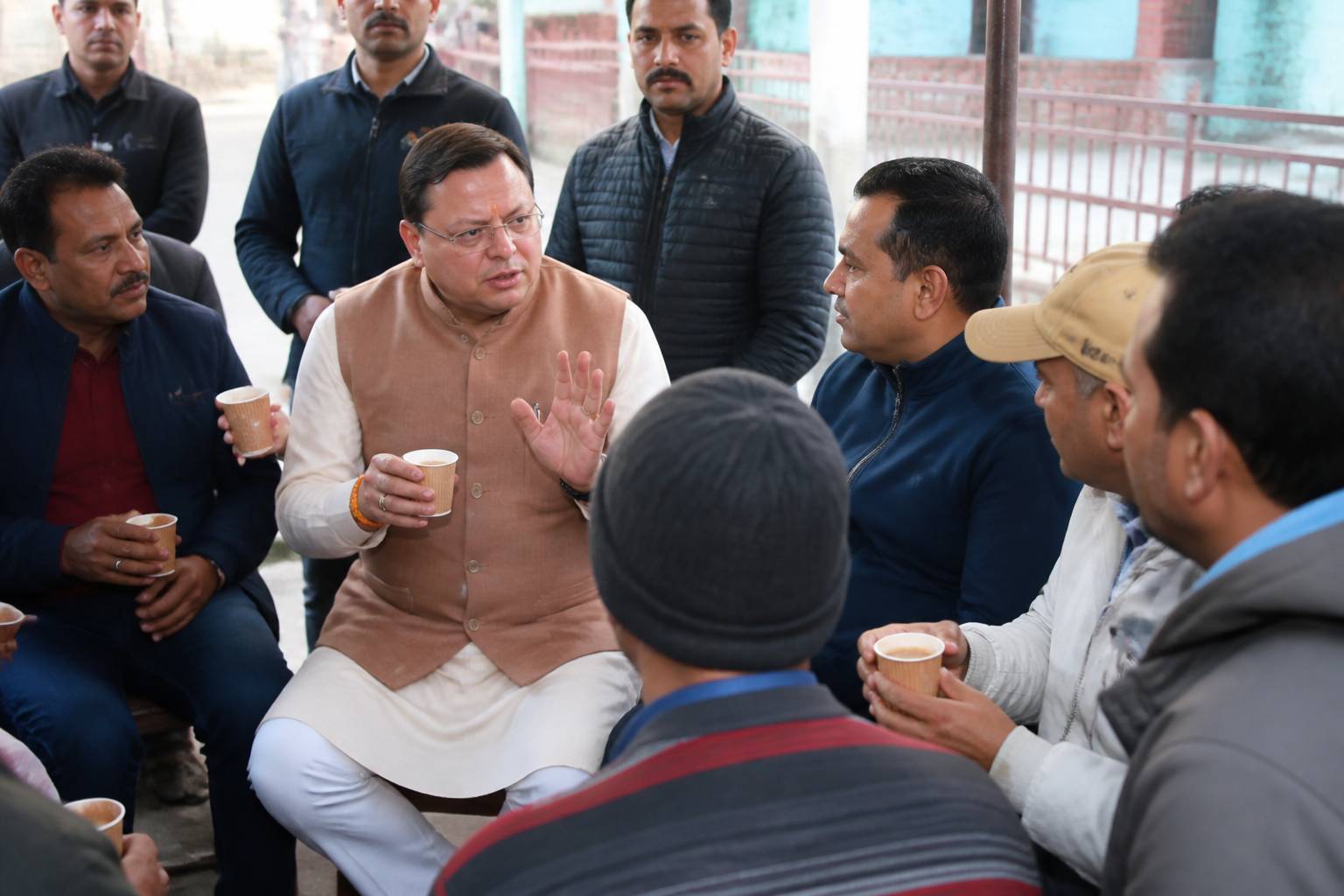
Uttarakhand Chief Minister Pushkar Singh Dhami has criticised Congress leader Rahul Gandhi over remarks related to caste, saying political discussion should not turn routine social interactions into occasions for identifying caste or discrimination. Dhami made the comments while meeting local residents over tea in Khatima.
During the interaction, tea was served in disposable cups. Dhami said the gathering reflected the warmth and affection of the people he met, rather than caste divisions. He argued that examining an ordinary exchange primarily through caste or political identity represented a narrow approach to politics.
Dhami also used the disposable cup as a political metaphor. He said the cup could be disposable, but people’s thinking should not become so limited that they begin searching for caste and politics even in a cup of tea.
Dhami’s message on social harmony
The chief minister said Uttarakhand’s social and cultural traditions are linked to harmony, brotherhood and mutual affection. In his view, these values should shape public life and political debate when people from different backgrounds meet in everyday settings.
Dhami said direct interactions with residents allow political leaders to connect with people beyond formal administrative and political environments. He maintained that such relationships should not be judged through a narrow lens of caste or political affiliation.
His preferred focus for politics, he said, should be bringing people together and addressing issues that affect society as a whole. He also stressed mutual respect and fraternity as important parts of Uttarakhand’s community life and shared social responsibility.
Caste and representation in political debate
The remarks came against the wider backdrop of a political debate over caste and representation. Political parties raise questions of social justice and representation, but Dhami argued that those concerns should not lead to every social interaction being understood mainly through caste or political divisions.
He said repeated attempts to identify caste or political separation in ordinary encounters could contribute to unnecessary polarisation. Political leadership, according to Dhami, should instead work to strengthen social cohesion.
The chief minister acknowledged that political differences are part of democratic discourse. However, he said efforts to divide society along caste lines do not serve the broader interests of the country.
What Dhami said in Khatima
Dhami’s comments followed his interaction with residents in Khatima over tea. His central argument was that the setting should be understood as a meeting marked by warmth and community, not as an occasion to impose caste or political divisions on a routine social exchange.
He reiterated that Uttarakhand’s tradition of brotherhood and social harmony should remain central to public life. The statement placed emphasis on shared social ties and the responsibility of political leaders to avoid deepening divisions.
Conclusion
Dhami’s Khatima remarks focused on keeping everyday community interactions separate from caste-based and political division. He said public life should be guided by social harmony, mutual respect and efforts that bring people together.
Frequently Asked Questions
Q. What did Pushkar Singh Dhami say in Khatima?
Dhami said caste and political divisions should not be sought in ordinary social interactions, including a tea gathering with residents.
Q. Who did Dhami criticise over caste remarks?
He criticised Congress leader Rahul Gandhi over remarks related to caste.
Q. Where did the interaction take place?
The interaction took place in Khatima in Uttarakhand.
Q. What was served during the meeting?
Tea was served to local residents in disposable cups.
Q. What values did Dhami highlight?
He highlighted social harmony, brotherhood, mutual respect and shared social responsibility.
Q. What did Dhami say about political differences?
He said political differences are part of democratic discourse but argued against dividing society along caste lines.
Q. Why did Dhami object to viewing everyday interactions through caste?
He said doing so reflected a narrow political approach and could contribute to unnecessary polarisation.
Q. What broader political issue did the remarks reference?
The comments came amid debate over caste, social justice and representation in national politics.